
Understanding Work-Related Stress and Its Impact
Causes of Stress in the Workplace
Imagine Sarah, a project manager juggling multiple deadlines while navigating team conflicts and last-minute client demands. Her experience is common in today’s fast-paced work environments, where heavy workloads, unclear expectations, and tight schedules create a breeding ground for stress. Other triggers include job insecurity, long hours, and poor communication, all of which contribute to mounting pressure that can easily become overwhelming.
Physical and Mental Symptoms of Stress
Kevin, an accountant, started noticing frequent headaches and an inability to focus—that’s his body signaling stress. Work-related stress often manifests physically through tension headaches, muscle tightness, or fatigue. Mentally, it can cause irritability, anxiety, or a sense of burnout. Being aware of these signs is crucial because stress left unchecked impacts not just work performance but overall well-being and satisfaction in life.
Why Breathing Exercises Are Effective
Breathing is something we do constantly without thinking, yet it holds tremendous power over our nervous system. In stressful moments, breathing tends to become shallow and rapid, fueling anxiety. Deliberate breathing exercises can reverse this pattern, activating the body’s relaxation response. This natural calming effect helps reduce heart rate and calm the mind, providing an accessible tool to manage stress instantly—even amid a hectic workday.
Immediate Breathing Techniques to Calm Your Mind
Deep Diaphragmatic Breathing
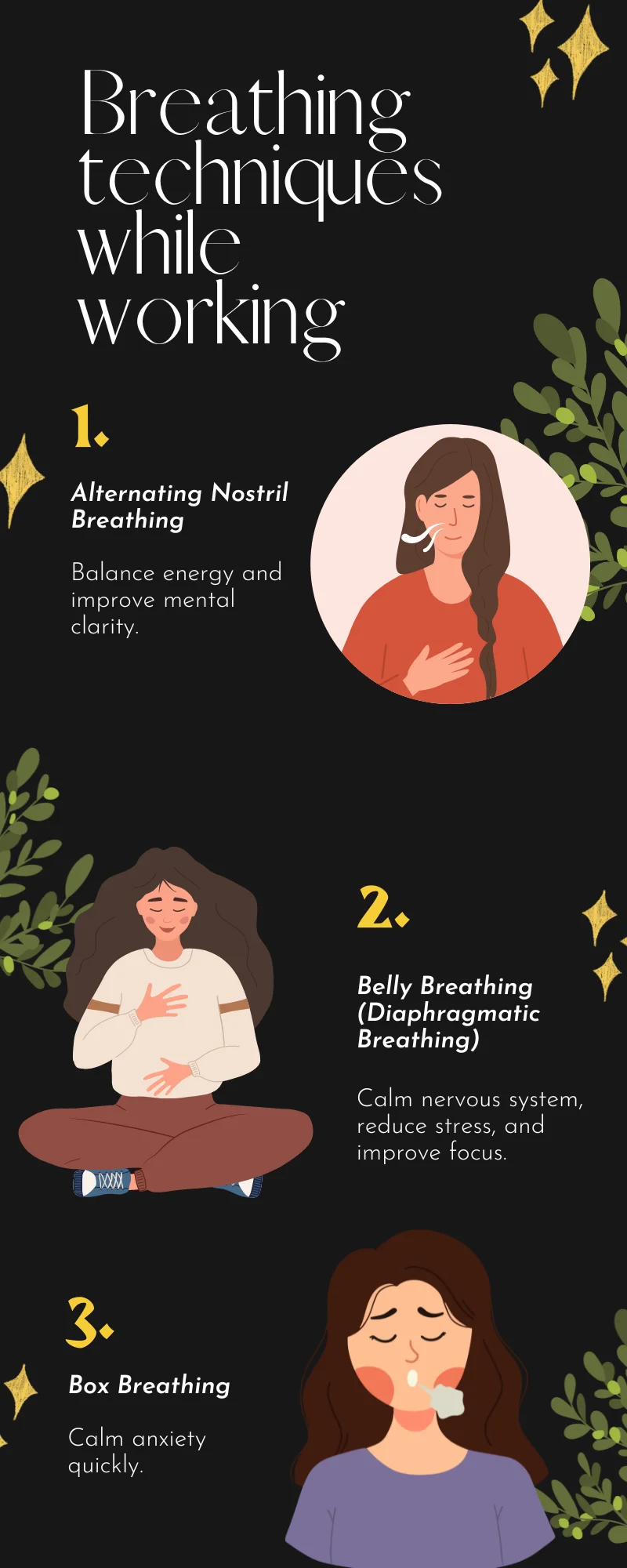
Consider Jane, a teacher overwhelmed by a difficult virtual class session. She takes a moment to sit back, placing one hand on her belly and slowly inhales through her nose, feeling her abdomen rise. Then, she exhales gently through her mouth. This deep diaphragmatic breathing engages the diaphragm fully, sending signals to the brain to relax. Within minutes, Jane feels a noticeable drop in tension and a clearer mindset to move forward.
4-7-8 Breathing Method
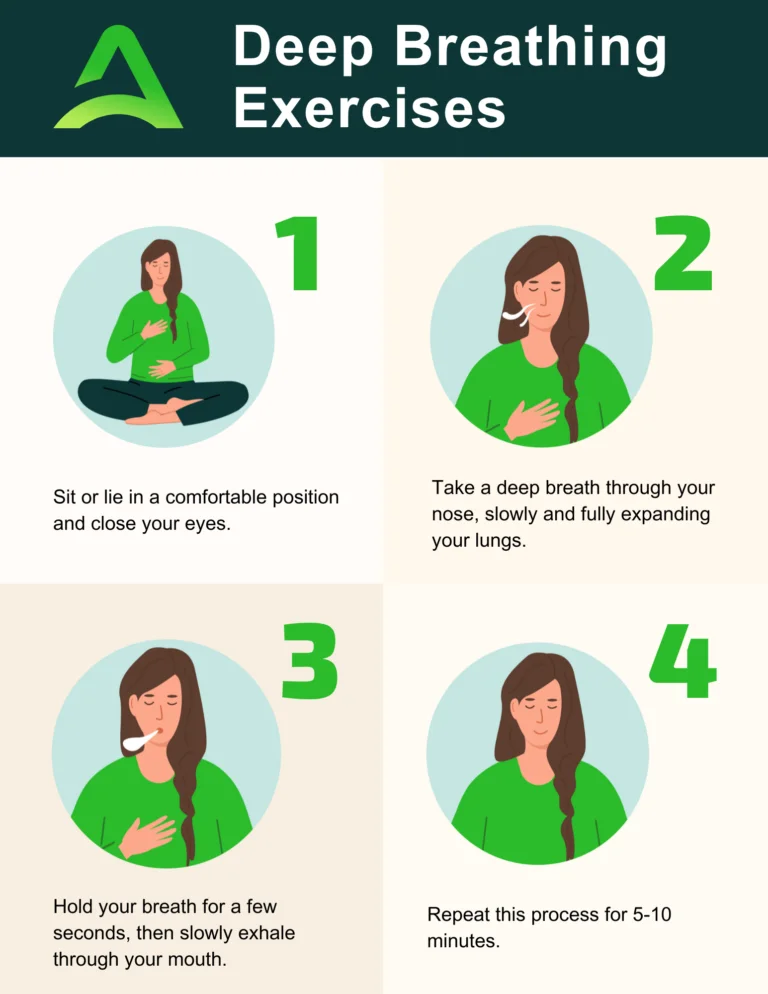
Mark uses the 4-7-8 technique during high-pressure meetings to regain composure. He inhales quietly through his nose for a count of four, holds the breath for seven seconds, and then exhales slowly for eight seconds. This simple rhythm helps extend the breath naturally, slowing the heart rate and easing anxiety. The method is practical when you have a few moments alone or even sitting quietly at your desk.
Box Breathing for Quick Relaxation
During a lunch break, Anita practices box breathing—inhale for four counts, hold for four, exhale for four, and pause for four. This technique, popular with athletes and military personnel, promotes focus and calm rapidly. It works well in stressful work situations as it balances oxygen levels and steadies the mind, allowing for a quick mental reset during a busy day.
Advanced Breathing Practices for Sustained Stress Relief
Alternate Nostril Breathing
Tom has incorporated alternate nostril breathing into his morning routine to maintain calm throughout the day. This practice involves closing one nostril at a time while inhaling and exhaling through the other. By balancing oxygen intake and breath control, it harmonizes the nervous system, helping reduce stress over time rather than just in immediate moments.
Resonant or Coherent Breathing
When deadlines loom, Lisa turns to resonant breathing, breathing at a steady pace of about five breaths per minute. This practice is said to improve heart rate variability, which reflects the body’s ability to respond to stress flexibly. Over weeks of consistent practice, Lisa noticed enhanced emotional regulation and resilience, making her better prepared for daily challenges.
Guided Breath Awareness Meditation
Many find that combining breath awareness with meditation deepens the stress-relief benefit. Sarah uses guided audio sessions to focus her attention on her breathing pattern, gently redirecting her mind from stressful thoughts. This meditative approach promotes mindfulness at work, encouraging a calm and centered presence even amid chaos.
Integrating Breathing Exercises into Your Workday
Setting Reminders and Creating a Routine
James struggled to remember his new breathing practices until he set phone reminders every two hours. These prompts anchored his routine, gradually turning exercises into habits. Integrating short breathing sessions before starting work, after meetings, or during breaks can establish a rhythm that supports ongoing stress management.
Using Breathing Techniques During Breaks
Utilizing breaks for mindful breathing transforms ordinary downtime into restorative moments. Instead of scrolling through emails during lunch, Maria steps outside, closes her eyes, and focuses on deep breaths. By dedicating even five minutes to breathing, she returns to her desk refreshed and better equipped to handle upcoming tasks.
Combining Breathing with Mindful Movement
Adding gentle stretches or walking with intentional breath coordination provides a powerful combination. Alex practices slow, deep breathing while stretching his neck and shoulders at his standing desk. This mindful movement releases physical tension while reinforcing relaxation, creating a more holistic approach to managing stress throughout the day.
Tools and Resources to Support Your Breathing Practice
Mobile Apps for Guided Breathing
Apps like Calm or Breethe offer guided breathing sessions that fit perfectly into busy schedules. They provide structured exercises with soothing audio cues, making it easier for users new to breathing techniques to follow along and stay motivated. For example, Naomi finds that the app’s gentle reminders and visuals help her maintain consistency even on demanding days.
Wearables That Track Stress Levels
Wearable devices, such as smartwatches, can monitor physiological data like heart rate variability and prompt you when stress indicators rise. This real-time feedback encourages timely breathing exercises. David used his smartwatch notifications to pause and practice box breathing, which helped him interrupt escalating tension before it affected his work.
Conclusion: Embracing Breathing for a Healthier Work Life
Stress at work is inevitable, but how we respond makes all the difference. Simple breathing exercises offer a practical, immediate, and accessible way to manage pressure and restore calm. By recognizing the signs of stress and integrating mindful breathing into daily routines, anyone can create a more balanced, focused, and healthier work life. Whether it’s a quick breath between meetings or a deeper daily practice, these techniques can transform moments of overwhelm into opportunities for renewed clarity and calm.


