
Introduction to Quick Home Workouts for Beginners
Why 20 Minutes is Enough to Get Started
For those just starting a fitness journey, the idea of exercising can feel overwhelming, especially with busy schedules and limited access to a gym. However, dedicating just 20 minutes a day to a home workout can be a practical and effective way to build consistency and improve overall health. Twenty minutes is enough time to elevate your heart rate, engage major muscle groups, and boost your metabolism, all without causing burnout or requiring complex routines.
This manageable time frame helps beginners avoid the intimidation of long workouts and increases the chances of making exercise a sustainable habit. Starting small also allows you to gradually build stamina and confidence, making it easier to increase intensity or duration over time.
Setting Realistic Goals for First-Time Exercisers
When you’re new to working out, setting achievable goals is crucial to maintaining motivation. Rather than aiming for drastic changes or long daily sessions, focus on simple objectives like completing your 20-minute routine consistently for a week or mastering a few basic movements with good form. Realistic goals help reduce frustration and prevent injury by encouraging gradual progress.
Think about what you want to achieve—whether it’s improving energy, losing a bit of weight, or simply moving more throughout the day—and tailor your goals accordingly. Remember, the goal is progress, not perfection, and establishing a positive routine sets the foundation for long-term fitness success.
Essential Equipment and Space Preparation
Minimal Gear Needed for Effective Workouts
One of the best aspects of home workouts is the minimal equipment requirement. Beginners don’t need fancy machines or a gym membership to get started. A yoga mat or comfortable surface provides cushioning and support for floor exercises. For added resistance, a pair of light dumbbells or resistance bands can be useful, but they are optional at the start.
Using bodyweight exercises such as squats, lunges, and push-ups allows you to work multiple muscle groups without any equipment at all. This simplicity makes it easier for beginners to commit to daily workouts without the need for extra purchases.
Creating a Safe and Comfortable Workout Area at Home
Setting up a designated workout space is an important step toward building a regular exercise habit. Choose an area with enough room to move freely and avoid clutter that could cause trips or falls. Ideally, the spot should be quiet and minimally distracting to help you focus.
Make sure the floor surface provides good traction to prevent slipping. Good ventilation or access to fresh air can also enhance your workout experience, making you more likely to stick with the program. Lastly, keep water nearby to stay hydrated throughout your session.
Step-by-Step 20-Minute Workout Plan
Warm-Up: 5 Minutes to Get Your Body Ready
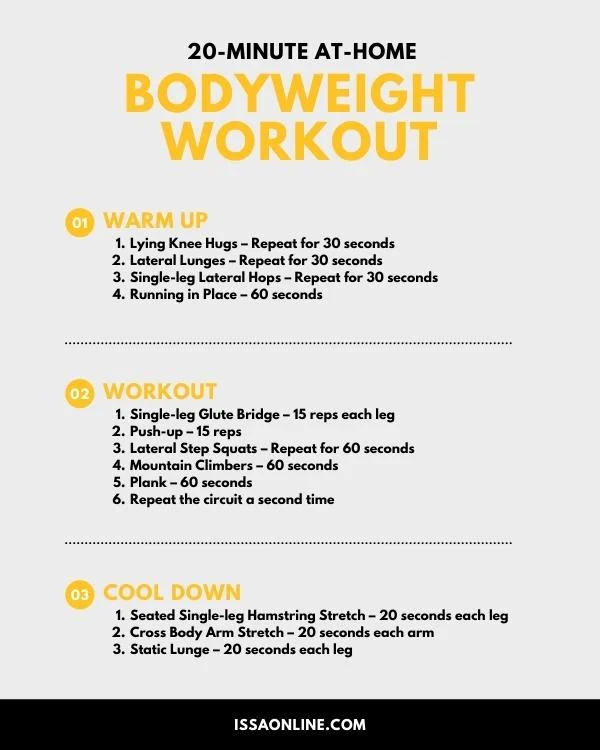
Before diving into the main workout, it’s essential to prepare your body with a warm-up. Spend about five minutes doing gentle activities such as marching in place, arm circles, or light jumping jacks. This helps increase blood flow to muscles, raise your heart rate gradually, and reduce the risk of injury.
Focusing on dynamic movements rather than static stretching during the warm-up is more beneficial at this stage, as it primes the muscles and joints for the exercises to come.
Main Workout: 10 Minutes of Simple Moves
After warming up, spend ten minutes performing a circuit of beginner-friendly exercises. Choose movements that target different muscle groups to create a balanced routine. For example, combine bodyweight squats, wall push-ups, seated leg lifts, and gentle core exercises like modified planks.
Perform each exercise for approximately 30 to 45 seconds, followed by 15 to 30 seconds of rest, then move on to the next. Repeat the circuit twice. This pacing keeps your heart rate up while allowing time to recover and maintain proper form.
Cool-Down: 5 Minutes to Stretch and Recover
Conclude your workout with a five-minute cool-down to help your body transition back to a resting state. Focus on slow, controlled stretches that target the muscles you worked during the session. Stretching enhances flexibility, reduces muscle soreness, and promotes relaxation.
Hold each stretch for about 20 seconds without bouncing, breathing deeply to encourage muscle release. This practice also helps prevent stiffness and prepares you for your next workout.
Tips to Stay Motivated and Consistent
Tracking Your Progress
Keeping a simple log of your workouts can be a powerful motivator. Write down the exercises you complete, the time spent, and any notes about how you felt. This record helps you see improvements over time and provides a sense of accomplishment, which fuels continued effort.
Additionally, tracking progress can alert you to plateaus or difficulties, signaling when you might need to adjust your routine or rest properly to avoid burnout.
Incorporating Variety to Avoid Boredom
While consistency is key, varying your workouts can prevent boredom and keep you engaged. Rotate through different exercises or change the order to challenge your muscles in new ways. Introducing low-impact cardio steps, gentle yoga flows, or simple dance moves can make sessions enjoyable and refreshing.
Variety also reduces the risk of overuse injuries and helps develop overall fitness by working different muscle groups and movement patterns.
Common Beginner Mistakes and How to Avoid Them
Beginners often make the mistake of pushing too hard too soon, which can lead to injury or early burnout. It’s important to listen to your body, starting with low intensity and gradually increasing as your fitness improves. Skipping warm-ups or cool-downs is another common error that undermines workout effectiveness and recovery.
Another pitfall is neglecting proper form in exercises. Poor technique can cause strain and reduce the benefits of your workout. Taking the time to learn correct movement patterns, even from online tutorials or beginner classes, is essential for safe progress.
Finally, inconsistency due to unrealistic expectations or lack of planning can derail progress. Setting manageable goals, scheduling your workouts, and creating a positive environment will help you stay on track.


