
Understanding Work-Related Stress and Its Impact
What Causes Stress in the Workplace?
Work-related stress often arises from a variety of factors including heavy workloads, tight deadlines, and unclear job expectations. Interpersonal conflicts and lack of control over work tasks can also contribute. These pressures build up, creating a sense of overwhelm that many employees experience daily.
Physiological and Psychological Effects of Stress
Stress triggers a response in the body that affects both physiological and psychological health. Physically, it can lead to increased heart rate, muscle tension, and shallow breathing. Psychologically, stress may cause anxiety, irritability, and difficulty concentrating. Recognizing these effects is key to managing stress effectively.
Why Breathing Exercises Are Effective for Stress Relief
The Science Behind Mindful Breathing
Mindful breathing activates the parasympathetic nervous system, which counteracts the body’s stress response. By focusing on controlled, intentional breaths, the brain receives signals to relax, leading to a decrease in cortisol levels and calming of the nervous system. This physiological shift helps reduce feelings of tension rapidly.
Benefits Beyond Relaxation
Beyond immediate relaxation, regular breathing exercises can improve focus, enhance emotional regulation, and support better sleep. They offer a portable and accessible way to manage stress without requiring special equipment or environments, making them especially useful during a busy workday.
Top Breathing Techniques to Reduce Stress Fast
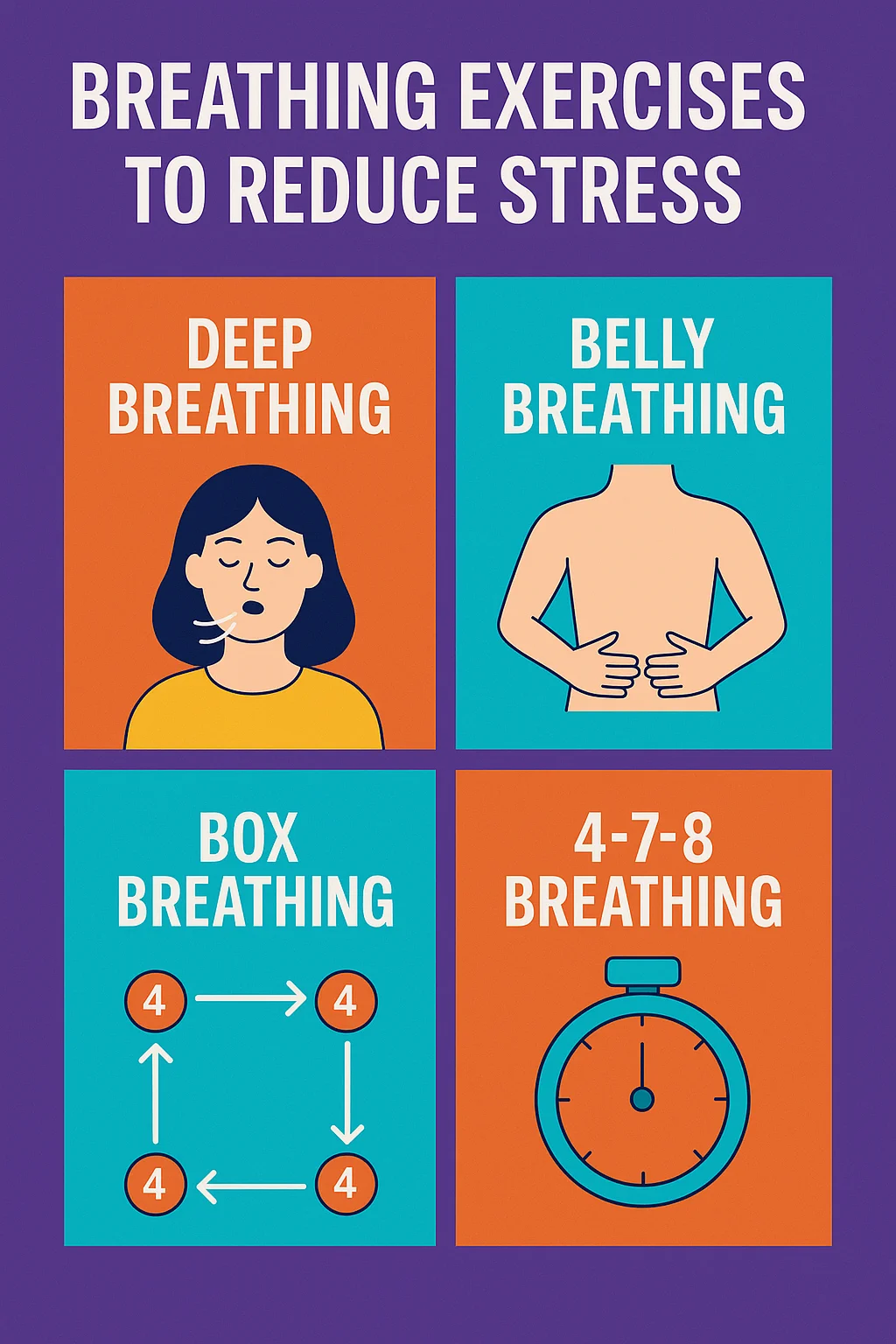
1. Diaphragmatic Breathing
This method encourages deep breaths that engage the diaphragm rather than shallow chest breathing. It promotes oxygen flow to the body and helps reduce tightness and anxiety quickly.
2. 4-7-8 Breathing Method
By inhaling for four counts, holding for seven, and exhaling for eight, this technique slows the breath and calms the nervous system. Its rhythmic pattern is designed to ease tension effectively.
3. Box Breathing
Box breathing involves four equal steps: inhale, hold, exhale, hold, each for a set duration. This balanced approach enhances concentration and aids in stress reduction by creating a predictable breathing pattern.
4. Alternate Nostril Breathing
This practice involves breathing through one nostril at a time while closing the other, alternating sides. It aims to balance the body’s energy and soothe the mind, leading to quick stress relief.
Step-by-Step Guide to Practicing Each Breathing Exercise
Setting Up Your Environment
Choose a quiet, comfortable spot free from distractions. Sitting upright with feet flat on the floor supports better breathing. Dim lighting or natural light can create a calming atmosphere, but even a brief moment at your desk can be effective.
Timing and Frequency for Maximum Impact
Short sessions of just a few minutes can provide immediate relief. Aim for two to four times per day, especially before or after stressful tasks. Consistency helps deepen the benefits over time, but even occasional practice can make a difference in moments of acute stress.
Integrating Breathing Exercises into Your Workday
Quick Techniques for Break Times
During short breaks, use diaphragmatic or 4-7-8 breathing to refresh your mind and body. These techniques can restore calm quickly, increasing productivity and reducing burnout.
Using Breathing to Manage Stress Before Meetings or Deadlines
Just a minute or two of box breathing before high-pressure situations can help center your focus and reduce anxiety. Alternate nostril breathing may also stabilize emotions, promoting a more composed presence when stakes are high.
Additional Tips to Complement Breathing Exercises
Combining Breathing with Stretching or Meditation
Pairing breathing with gentle stretches or a brief meditation can amplify relaxation. Movement helps release physical tension, while meditation reinforces mental calm, creating a holistic approach to stress management.
Maintaining Consistency for Long-Term Stress Relief
Regular practice embeds these techniques into your routine, making stress relief more accessible when needed. Setting reminders or linking breathing exercises to daily habits can support consistency and enhance overall well-being.


