
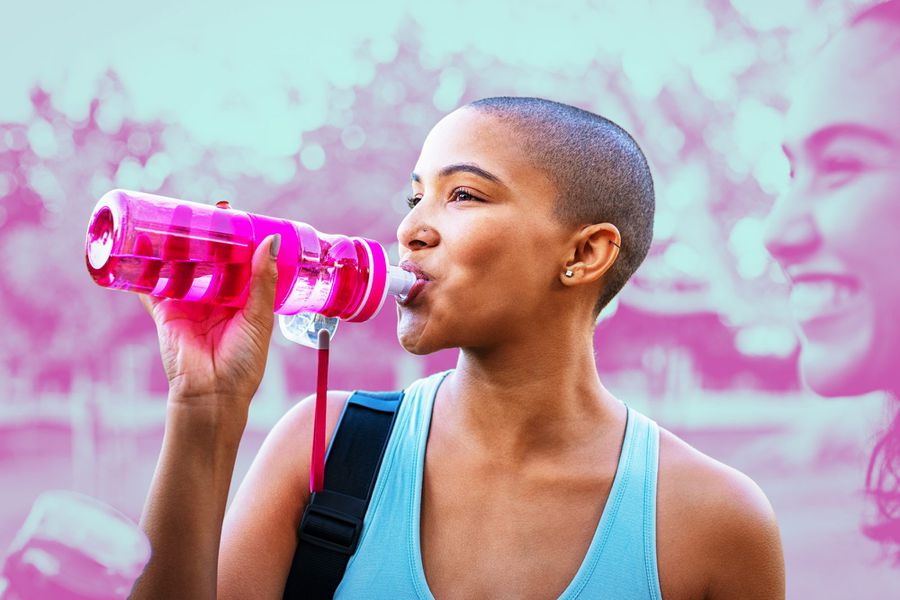
If you’re trying to lose weight, making simple changes to your lifestyle, such as heading outdoors for longer walks, reducing your stress levels, and drinking more water, may seem like the least overwhelming, and perhaps most sustainable, course of action. But can upping your H2O intake really help you achieve your goals? And, if so, how much water should you drink to lose weight? Here, two nutrition pros break it down.
The Key Takeaways
Drinking water and consuming fluids may potentially contribute to weight loss, either through curbing your carb- or sugar-heavy cravings, boosting feelings of fullness, or increasing your metabolism. But there isn’t one magic answer to “how much water should I drink to lose weight?” — nor is water a weight-loss elixir. Instead, staying hydrated should be seen simply as one single component of a holistic strategy to hit your health goals, which may also include scoring satisfying macronutrients (e.g. fats, fiber, protein), limiting refined carbohydrates, and increasing your movement throughout the day, say Kimball and McDaniel. “It’s sort of a very moderate [approach to weight loss], but none of it is like, ‘Oh, drink this much water and you’re going to melt it off of you,'” says Kimball.
And if you’re thinking about trying to lose weight, both nutrition pros recommend scheduling an appointment with a registered dietitian or your health care provider before chugging a gallon or two of water. “The money that you would spend [on a consultation] can pay so much more dividends in the long run because it’s giving you an education,” says Kimball. “It can save you money from trendy mistakes that you can make later, and it helps you learn more about your own relationship with food…so it can help you start to learn a little bit more of a personalized approach for yourself.” (See also: Black Nutritionists to Follow for Recipes, Healthy Eating Tips, and More)


