
Understanding the Impact of Prolonged Sitting
Health Risks Associated with Desk Jobs
Imagine Lisa, a graphic designer who spends nearly eight hours a day glued to her computer screen. Over time, she notices a nagging ache in her lower back and a persistent stiffness in her neck. This is not unusual for those with desk jobs. Prolonged sitting is linked to numerous health risks including poor circulation, increased risk of cardiovascular disease, and musculoskeletal problems. The sedentary lifestyle that often accompanies desk work can also contribute to weight gain and reduced metabolic rates, which elevate the risk of diabetes and other chronic conditions.
How Stiffness Develops During Long Hours
Stiffness doesn’t just appear out of nowhere. It develops gradually as muscles and joints remain static for extended periods. When sitting, the hip flexors tighten, the spine compresses, and blood flow decreases, particularly in the legs. This can lead to discomfort and a feeling of rigidity that makes even simple movements painful. John, an accountant, found that after hours without moving, his shoulders would lock up, making it difficult to focus on his work. This exemplifies how physical discomfort can directly affect productivity and well-being.
Simple Desk Exercises to Keep You Moving
Upper Body Stretches: Neck, Shoulders, and Arms
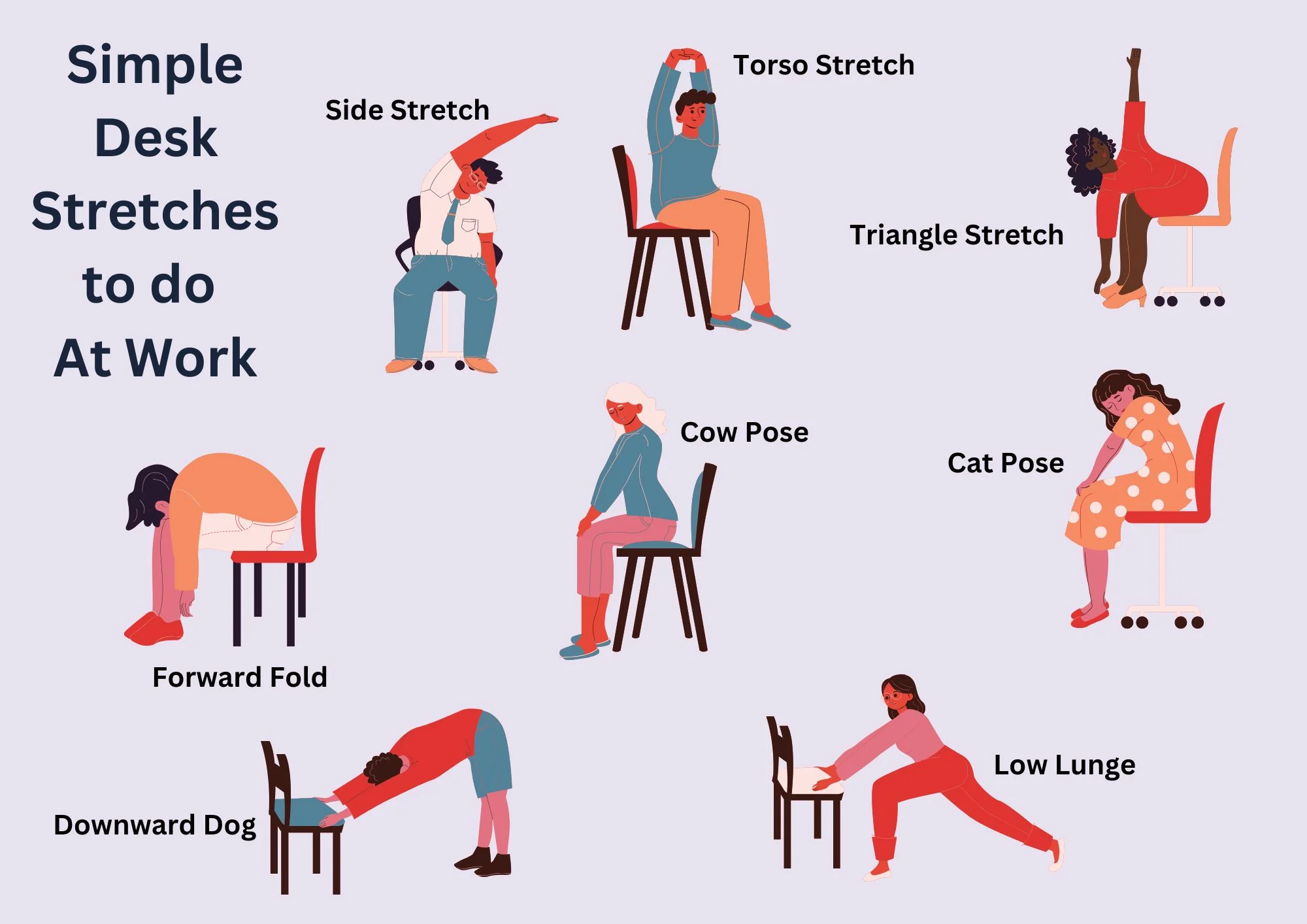
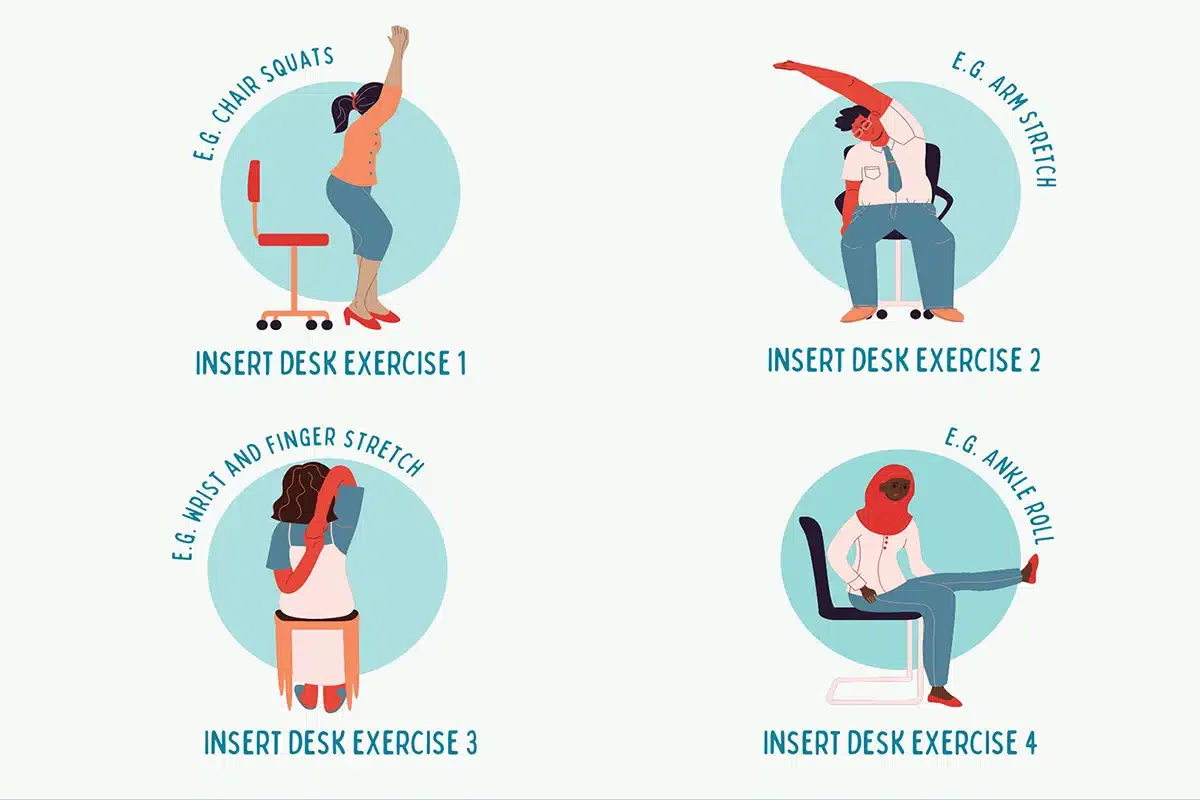
One practical way to combat stiffness is by integrating small stretches into your routine. For example, while on a call, Sarah gently tilts her head from side to side to relieve neck tension. Rolling the shoulders backward and forward can open up the chest and reduce tightness. Stretching arms overhead or extending them in front of you encourages blood flow and loosens muscles. These actions, done multiple times a day, can drastically reduce the feeling of fatigue in the upper body.
Lower Body Movement: Legs and Ankles
Leg stiffness is common for those seated long hours. Simple ankle circles or flexing and pointing the toes can help maintain circulation and prevent swelling. Tim, a software developer, swears by lifting each leg in turns and holding it straight for 10 seconds at a time under his desk during breaks. These subtle movements activate muscles that otherwise remain static and reduce the risk of developing deep vein thrombosis or muscle cramps.
Core Activation Techniques at Your Desk
Engaging the core might seem challenging without leaving your chair, but it’s essential for spinal health. A good practice is sitting up straight and drawing the belly button gently towards the spine, holding the tension for several seconds. This not only improves posture but strengthens the muscles supporting the lower back. Emma, a customer service representative, uses brief moments between calls to activate her core, noticing a significant decrease in her lower back discomfort over time.
Incorporating Movement Into Your Workday Routine
Best Times to Perform Desk Exercises
The best opportunities for desk exercises are during natural breaks in workflow such as after completing a task, during meetings that don’t require full attention, or simply every hour. Mateo, a marketing analyst, sets a personal goal to move every 45 minutes, which helps him return to work feeling refreshed rather than stiff and distracted.
Setting Reminders and Creating a Movement Schedule
One common challenge is remembering to move. Utilizing smartphone reminders or computer notifications can prompt timely exercise. Creating a simple schedule outlining short movement sessions during the day enforces consistency. For instance, setting a reminder to stretch neck and shoulders mid-morning, perform leg exercises after lunch, and engage the core late in the afternoon can seamlessly integrate movement without disrupting productivity.
Using Ergonomic Tools to Aid Mobility
Ergonomic tools, such as adjustable chairs, footrests, or desk cycles, support movement throughout the day. Mike, a writer, invested in a balance ball chair which encourages micro-movements while sitting, helping him stay active. Similarly, using a standing desk or a sit-stand converter can allow for frequent changes in posture, reducing stiffness and promoting better circulation.
Benefits of Regular Desk Exercises on Productivity
Improved Concentration and Energy Levels
Regular movement stimulates blood flow, delivering oxygen to the brain which enhances focus and mental clarity. Anna, a project manager, noticed that her afternoon slump disappeared once she started incorporating desk exercises, leading to higher efficiency and a more engaged workday. The simple act of stretching can generate energy boosts that reduce feelings of lethargy.
Reducing the Risk of Chronic Pain and Injury
Chronic pain arising from repetitive strain or poor posture can be debilitating and may lead to prolonged absenteeism. Desk exercises help maintain muscle flexibility and joint mobility, which protects against injuries. Mark, who experienced early signs of carpal tunnel syndrome, found that consistent wrist and arm stretches prevented further progression, allowing him to continue working comfortably.
Additional Tips for Maintaining Mobility Beyond Exercises
Proper Posture and Sitting Techniques
Maintaining the right posture is fundamental. Sitting with feet flat on the ground, using a chair that supports the natural curve of the spine, and avoiding slouching helps prevent stiffness. Lucy, an editor, adjusted her workstation ergonomically and discovered a significant reduction in neck and back strain by simply correcting her posture throughout the day.
Standing Desks and Alternative Workstations
Alternating between sitting and standing is an effective way to minimize stiffness. Standing desks or adjustable workstations encourage movement and reduce the time spent in static postures. Robert, who transitioned to a sit-stand desk, shares that changing positions throughout the day keeps him more alert and less prone to the aches associated with continuous sitting.


