
Why Desk Organization Impacts Mental Focus
The Connection Between Clutter and Cognitive Load
A cluttered desk often brings more than just physical disorder; it increases mental clutter as well. When your workspace is filled with unnecessary items, your brain has to filter through distractions and excess stimuli. This heightened cognitive load can reduce your ability to concentrate, making it harder to focus on important tasks. By minimizing clutter, you free up mental resources, allowing for clearer thinking and improved productivity.
Psychological Benefits of an Organized Workspace
An organized desk promotes a sense of calm and control. This psychological benefit translates directly into increased motivation and a positive mindset. When everything has a place and is easy to find, stress levels decrease, and frustration related to searching for items is reduced. An orderly environment can also enhance creativity by providing a clean slate for new ideas to form.
Essential Desk Organization Hacks for Improved Concentration
Decluttering Techniques That Actually Work
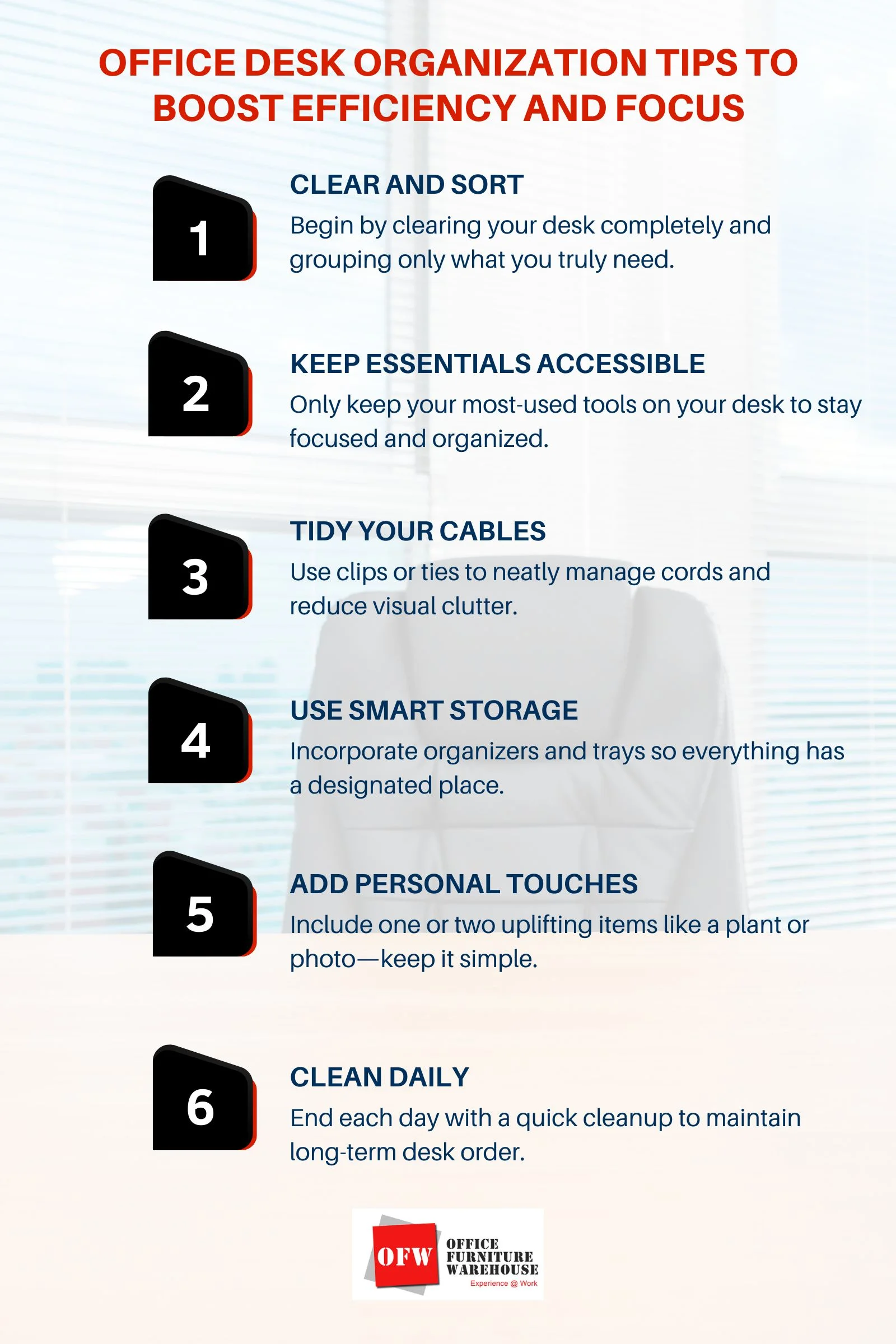
Start by removing all non-essential items from your desk. Assess each object’s necessity and function. Keep only tools and materials that you use daily within arm’s reach. Consider sorting papers immediately into folders or recycling piles. Don’t hesitate to digitize documents to reduce physical clutter. The key is to maintain a minimalist mindset that prioritizes function over decoration.
Utilizing Storage Solutions Smartly
Effective storage can transform your desk from chaotic to streamlined. Use drawer dividers and small containers to separate different items like stationery and cables. Vertical storage options, such as shelves or wall-mounted organizers, maximize space without crowding the desktop. Clear labeling helps maintain order by ensuring everything has a designated spot and is easy to locate.
Choosing Functional Desk Accessories
Select accessories that combine aesthetics with practical use. Items like monitor stands can free up surface space while improving ergonomics. Desk organizers with multiple compartments provide flexibility for storing diverse items. Avoid bulky or purely decorative pieces that take up valuable room. Functional design enhances workflow and supports sustained focus.
How to Maintain Your Organized Desk Daily
Simple Habits to Prevent Mess Build-up
Consistency is crucial when keeping your desk tidy. Develop routines such as clearing your workspace at the end of each day or putting items back immediately after use. Avoid piling up papers by handling correspondence and notes as soon as they arrive. These small habits prevent mess from accumulating and reduce the effort required to reorganize later.
Routine Cleaning and Reorganizing Methods
Schedule weekly or biweekly desk clean-ups to reassess your organization system. Wipe down surfaces to remove dust and keep the space inviting. Regularly review the necessity of stored items and discard anything no longer needed. This ongoing maintenance keeps clutter from creeping back and ensures your workspace continues to support mental clarity.
Leveraging Technology and Apps for a Tidy Desk
Digital Tools to Enhance Workflow and Reduce Paper
Embrace digital solutions to minimize physical paperwork and streamline tasks. Cloud storage lets you organize and access documents without cluttering your desk. Note-taking apps eliminate the need for scattered sticky notes. Using digital calendars and reminders replaces piles of paper schedules, contributing to a cleaner and more efficient workspace.
Tracking Task Progress to Minimize Desk Chaos
Task management apps help keep your workflow visible and organized. By breaking work into manageable chunks and tracking deadlines, these tools reduce the likelihood of creating paper piles as reminders. Visual progress helps maintain motivation and focus, indirectly contributing to a tidy desk and a clear mind.


