
Introduction to Resistance Band Training at Home
Why Choose Resistance Bands for Strength Training?
Resistance bands offer a versatile, affordable option for strength training at home. They are portable, easy to store, and provide adjustable levels of resistance that suit beginners and advanced users alike. Unlike traditional weights, bands reduce joint strain while effectively targeting muscles, making them ideal for improving strength without bulky equipment. Their adaptability supports a full-body workout, helping users build muscle tone, enhance flexibility, and boost overall fitness.
Overview of Different Types of Resistance Bands
Resistance bands come in various forms, each suited for specific exercises and resistance levels. Loop bands are continuous and great for lower body exercises. Tube bands with handles offer a comfortable grip and are useful for upper body workouts. Flat bands, often used in rehabilitation, allow for gentle resistance. Choosing the right type depends on your fitness goals, preferred exercises, and experience level. It’s helpful to have multiple bands with varying resistance to tailor workouts efficiently.
Getting Started with Resistance Bands
Essential Equipment You’ll Need
Beyond the bands themselves, basic equipment includes a sturdy anchor point like a door attachment or a heavy piece of furniture. Having a yoga mat can enhance comfort during floor exercises. Also, wear supportive athletic shoes and comfortable clothing that allows freedom of movement. Keeping a towel and water bottle nearby helps manage sweat and hydration. Setting up with these essentials ensures a productive and safe workout.
Setting Up a Safe Workout Space
A clear and spacious area free of obstacles is crucial for safety when using resistance bands. Ensure the floor is even to avoid tripping. Check that door anchors or attachment points are secure before beginning exercises. Make sure the space has enough room for movement and stretching. Good lighting and ventilation improve comfort and focus. A dedicated workout area helps maintain routine and minimizes interruptions.
Step-by-Step Guide to Basic Resistance Band Exercises
Lower Body Workouts: Squats and Leg Press
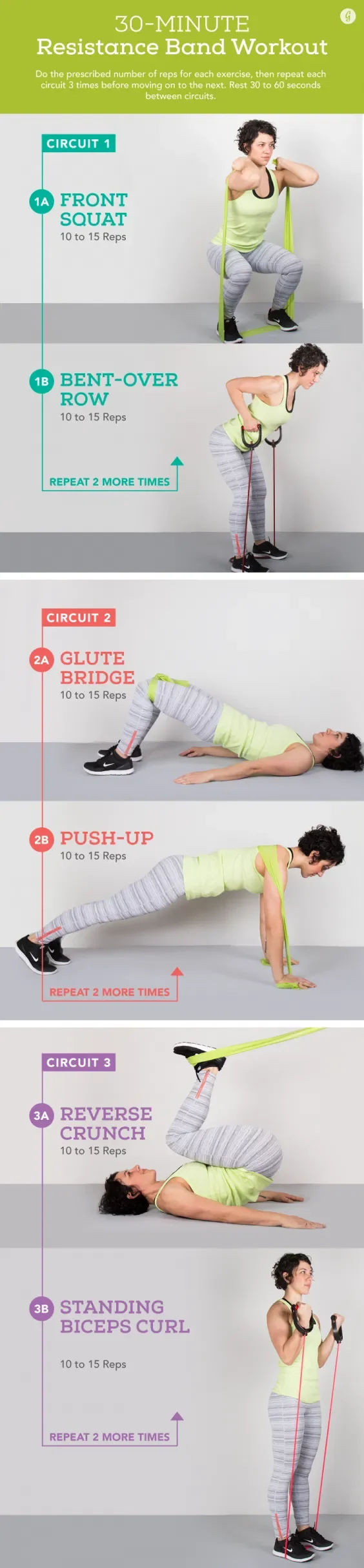
Start with loop bands placed just above the knees for squats. Stand with feet shoulder-width apart, keeping tension in the band as you bend knees and push hips back. Return to standing while maintaining resistance on the band to engage glutes and thighs. For leg presses, anchor the band under a sturdy surface, loop it around one foot, and press forward. Control the movement to avoid snapping the band and maximize muscle activation.
Upper Body Strength: Rows and Shoulder Press
For rows, secure bands at waist height or lower. Hold handles or band ends, step back to create tension, and pull elbows backward while squeezing shoulder blades together. Maintain a straight back throughout. Shoulder presses require standing on the band with feet hip-width apart, holding handles at shoulder level. Press upwards extending arms fully. Slow, controlled motions build shoulder and arm strength effectively.
Core Engagement: Band-Resisted Twists
Attach the band at chest height to a stable anchor. Hold the band with both hands and step sideways to create tension. Rotate your torso away from the anchor point, engaging the core muscles. Return slowly to the center. This exercise improves rotational strength and stability, essential for sports and daily activities. Keep movements smooth and avoid using momentum for best results.
Progressing with Resistance Bands
Increasing Intensity and Resistance Levels
To challenge muscles further, use bands with higher resistance or double up lighter bands. Increasing repetitions or slowing down movements can also enhance intensity. Gradually advancing prevents plateaus and promotes continuous strength gains. Tracking progress by noting repetitions, sets, or band strength helps maintain motivation and ensures steady improvement.
Combining Bands with Bodyweight Exercises

Integrating resistance bands with bodyweight movements adds variety and complexity. For example, adding bands to push-ups or planks increases muscle engagement. Combining techniques improves functional strength and endurance. It also helps target muscles from different angles, reducing the risk of overuse injuries. Experimenting with combinations keeps workouts interesting and effective.
Common Mistakes and How to Avoid Them
Proper Band Placement and Form
Incorrect band placement can reduce workout effectiveness and increase injury risk. Always position bands securely and ensure tension is appropriate. Maintaining proper form during exercises is vital—avoid compensatory movements like arching the back or locking joints. Focus on controlled, deliberate motions to maximize benefits. Using a mirror or recording yourself can help identify and correct form issues.
Avoiding Overuse Injuries
Overusing resistance bands without adequate rest can lead to strain and discomfort. It’s important to balance workout intensity with recovery time. Incorporate rest days and alternate between muscle groups to allow healing. Stretching before and after exercises improves flexibility and reduces injury risk. Listening to your body and adjusting workouts when experiencing pain supports long-term fitness success.
Conclusion: Benefits of Consistent Resistance Band Training
Regular resistance band training builds strength, enhances flexibility, and supports joint health without requiring expensive equipment. Its adaptability suits all fitness levels and lifestyles, especially for home workouts. Consistency promotes muscle tone, improves posture, and boosts overall well-being. By following proper techniques and progressing thoughtfully, resistance bands can be a powerful tool in achieving sustainable fitness goals.


