
Understanding Overthinking and Its Effects
What Is Overthinking?
Overthinking involves repeatedly dwelling on the same thoughts, often leading to excessive worry and indecision. It can create a mental loop where the mind fixates on potential problems or regrets, making it difficult to focus on the present. This habit is common but can be mentally exhausting if left unchecked.
How Overthinking Impacts Mental Health
Persistent overthinking can increase stress and anxiety, sometimes contributing to depression. It distorts perception, amplifies worries, and drains emotional energy. The inability to break free from these thought patterns affects sleep, productivity, and overall well-being, often causing a sense of mental paralysis.
The Role of Mindfulness in Combating Overthinking
Mindfulness encourages awareness of the present moment without judgment, helping disrupt the cycle of overthinking. By focusing on what is happening now, mindfulness reduces the tendency to ruminate on past mistakes or future uncertainties. This practice fosters mental clarity, calmness, and emotional balance.
Introduction to Mindfulness Journaling
Benefits of Journaling for Mental Clarity
Journaling offers a structured way to externalize thoughts, making them easier to analyze and manage. Writing mindfully brings attention to feelings and thought patterns, creating space for self-reflection. This process often leads to insights that can reduce mental clutter and improve emotional resilience.
Setting Up a Mindfulness Journal
Choose a dedicated notebook or digital platform to record your thoughts regularly. Keep it simple, focusing on honesty rather than perfection. The goal is to create a safe mental space where you can freely explore your experiences without pressure or judgment.
Choosing the Right Time and Environment
Set aside a consistent time, preferably when your mind is calm, such as early morning or before bed. Find a quiet, comfortable spot free from distractions. This routine supports concentration and deepens your connection with the present moment, enhancing the effectiveness of journaling.
Simple Mindfulness Journaling Prompts to Try Today
Prompts to Ground Yourself in the Present Moment
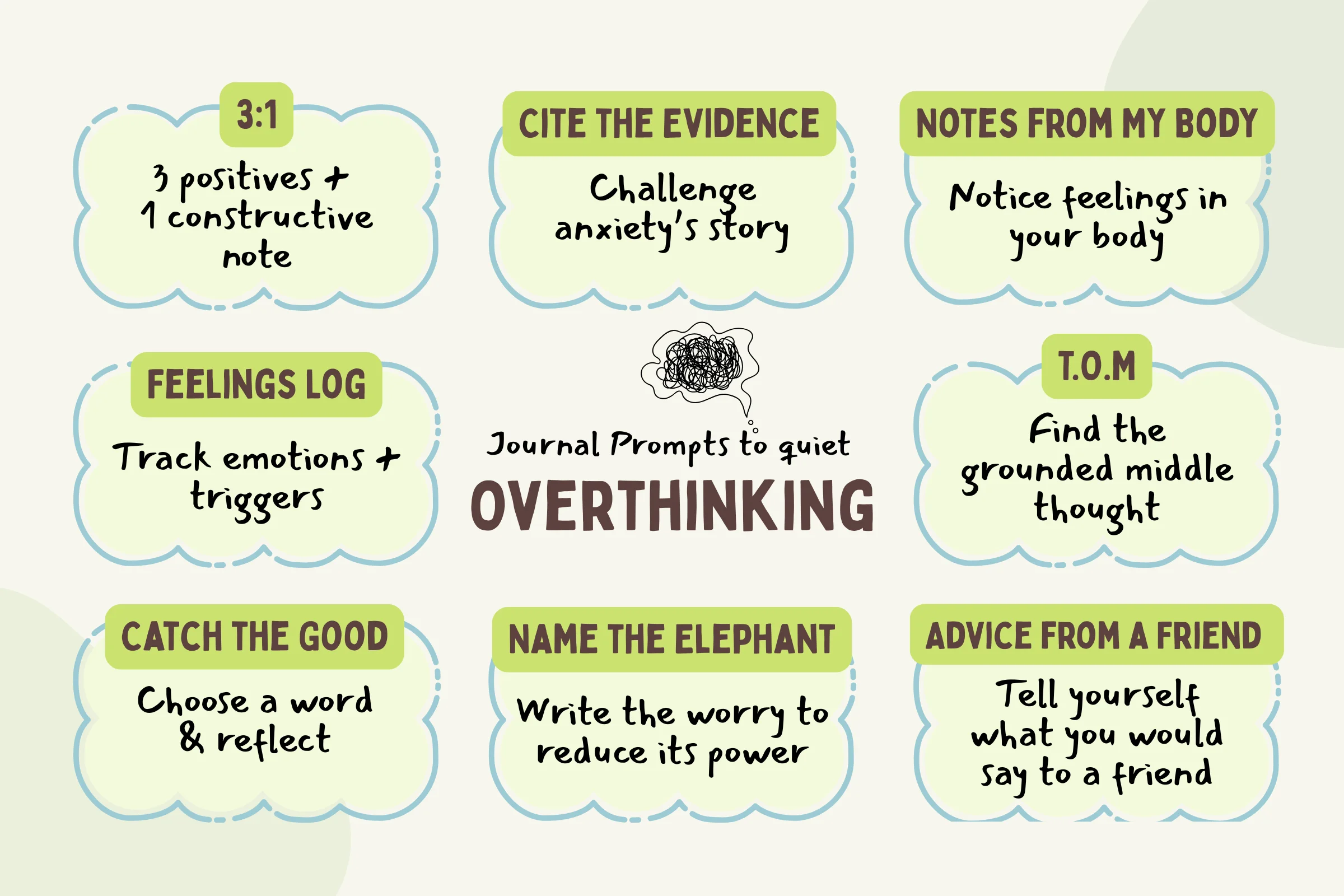
Start with simple questions that bring your attention to the here and now. For example, ask, “What sensations am I experiencing right now?” or “What sounds can I hear around me?” These prompts anchor your awareness and reduce mental wandering.
Questions to Identify Triggers of Overthinking
Reflect on moments when your thoughts spiral. Try writing about what event, feeling, or person initiates your overthinking. Questions like “What was I thinking just before I started overthinking?” can uncover hidden triggers and patterns that need addressing.
Reflective Prompts to Challenge Negative Thoughts
Use your journal to question unhelpful beliefs. For instance, write responses to, “Is this thought based on fact or assumption?” or “What evidence do I have that contradicts this worry?” This practice shifts your perspective and weakens the grip of negativity.
Gratitude-Focused Prompts to Shift Perspective
Incorporate gratitude by listing things you appreciate each day. Prompts like “What are three small things I’m thankful for today?” cultivate positivity and help counterbalance anxious or repetitive thinking with uplifting reflections.
Advanced Techniques for Mindfulness Journaling
Incorporating Visualization with Writing
Combine journaling with guided imagery by first closing your eyes and imagining a peaceful place or a desired outcome. After visualizing, write about the images and feelings that arose. This technique deepens relaxation and reinforces positive mental states.
Using Mindful Breathing Exercises Alongside Journaling
Before journaling, practice mindful breathing to calm the mind. Focus on slow, deep breaths for a few minutes. Once centered, begin writing. This approach enhances focus and allows you to access thoughts and emotions with greater clarity.
Maintaining a Consistent Mindfulness Journaling Practice
Tips for Overcoming Journaling Resistance
It’s normal to feel stuck or resistant. Start small by writing just a sentence or two each day. Avoid judgment of your entries and remind yourself that the practice is for your benefit. Flexibility in time and style can help sustain the habit over the long term.
Tracking Your Progress and Noticing Changes
Periodically review past entries to observe shifts in thought patterns and emotional responses. Recognizing progress, no matter how subtle, reinforces motivation. Journaling becomes a tool not just for managing overthinking but for personal growth.
When to Seek Professional Help
If overthinking leads to severe anxiety, depression, or interrupts daily functioning, reach out to a mental health professional. Mindfulness journaling complements therapy but doesn’t replace the need for professional support in serious cases.


