
Understanding the Importance of Meditation for Busy Professionals
The Science Behind Meditation and Stress Reduction
Imagine Sarah, a project manager swamped with deadlines and back-to-back meetings. She felt constantly overwhelmed until she started meditating for just 10 minutes a day. Science supports Sarah’s experience — meditation activates the parasympathetic nervous system, which calms the body’s stress response. Studies have shown that even brief daily meditation can reduce cortisol levels, the hormone linked to stress. This translates into improved focus, lowered anxiety, and better emotional regulation.
For busy professionals like Sarah, these benefits can mean clearer thinking during critical decisions and a calmer demeanor under pressure. Meditation is not just a wellness trend; it has a neurological basis for helping the brain rewire for resilience and productivity.
Common Challenges Faced by Busy Professionals
Finding time amid a hectic schedule is the biggest obstacle. Professionals juggling work, family, and social obligations often feel they can’t spare even 10 minutes for themselves. The mind’s tendency to wander during meditation can also be discouraging for newcomers who expect immediate serenity. Additionally, some might struggle with finding the right environment free from distractions, making consistent practice difficult.
Recognizing these challenges upfront helps in creating a realistic meditation routine tailored to individual lifestyles, ensuring the practice remains sustainable.
Preparations Before Starting Your Daily 10-Minute Meditation
Choosing the Right Time and Environment
John, an attorney, discovered that early mornings before the day began were his optimal meditation window. The house was quiet, and his mind was fresh, making it easier to focus. Choosing a consistent time is crucial; it trains the mind to expect and prepare for meditation. Some may prefer a midday break to reset, while others might meditate before sleep to unwind.
Creating a dedicated, clutter-free space reinforces the habit. Even a corner with a comfy chair or cushion, away from screens and noisy surroundings, signals the brain that it’s time to relax and be present.
Essential Tools and Apps for Beginners
Maya, a marketing executive, credits smartphone apps for helping her stay on track. Beginners can benefit from meditation apps that offer guided sessions, soothing background sounds, and reminders. Tools such as noise-canceling headphones provide an immersive experience, especially in noisy environments.
While apps can be a great support, it’s important not to rely solely on them. Eventually, a self-guided practice enhances the ability to meditate anywhere, regardless of tools.
Step-by-Step Guide to a 10-Minute Meditation Routine
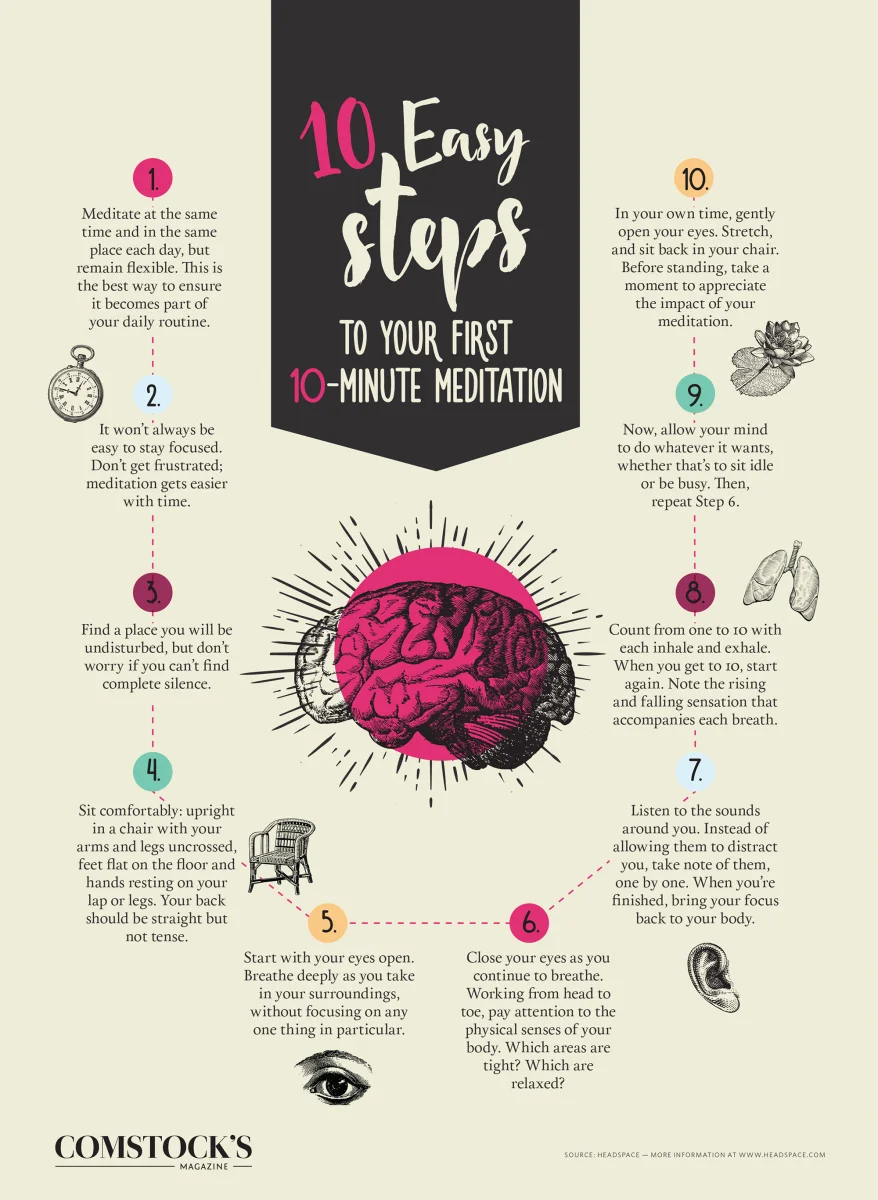
Minute 1-3: Settling In and Breathing Techniques
Begin by finding a comfortable seated position. Close your eyes and take slow, deep breaths. Focus on the inhalation and exhalation, feeling the air filling and leaving your lungs. This helps anchor the mind and reduces restlessness. For example, counting to four as you inhale and count to six while exhaling can extend relaxation.
During these moments, if distracting thoughts arise, acknowledge them without judgment and gently return to your breath.
Minute 4-7: Mindfulness and Visualization Exercises
Shift attention to the present moment, observing bodily sensations or ambient sounds without reacting. Visualization can enhance this phase—picture a serene place like a beach or forest, imagining the sights, sounds, and smells vividly. Such imagery can deepen relaxation and mental clarity.
Tom, a financial analyst, uses visualization to mentally rehearse a positive workday scenario, which boosts confidence and focus post-meditation.
Minute 8-10: Grounding and Transitioning Back
As the session nears its end, bring awareness back to your body. Feel your feet on the ground and become conscious of your surroundings. Stretch gently to signal the transition from meditation to daily activity. Opening your eyes slowly helps maintain the calm rather than rushing headlong into tasks.
This grounding phase minimizes the abruptness that often makes meditation feel disconnected from everyday life.
Incorporating Meditation Into a Busy Schedule
Identifying Micro-Moments for Practice
Lisa, a startup founder, found that brief pauses between meetings served as excellent opportunities to meditate. Even moments during a coffee break or while commuting (as a passenger) can be utilized for a quick practice. Recognizing these micro-moments transforms meditation from a rigid task into a flexible skill that fits naturally into a demanding day.
By mentally preparing for these pockets of time and treating them as non-negotiable, busy professionals can integrate meditation seamlessly.
Tips for Staying Consistent Amid Work Demands
Consistency can falter when unexpected work emergencies arise. Setting small, achievable goals helps maintain momentum. For instance, aiming for five days a week instead of seven reduces pressure. Combining meditation with an existing habit, such as brushing teeth or morning coffee, creates a trigger that reinforces the new routine.
Accountability partners or meditation groups can provide encouragement. Celebrating small wins keeps motivation alive despite the stresses of a busy professional life.
Advanced Techniques to Enhance Daily Meditation
Using Guided Meditation and Audio Cues
For those seeking deeper focus, guided meditations led by experienced practitioners offer structured paths through breathing, reflection, and relaxation. Audio cues like bell sounds or gentle chimes mark session segments and help maintain rhythm. Sarah, mentioned earlier, uses these to prevent her mind from wandering, especially on stressful days.
Using varying themes—such as gratitude, self-compassion, or stress release—can prevent the practice from becoming monotonous and tailor it to current needs.
Combining Meditation with Light Physical Activity
Some professionals find walking meditation or gentle yoga movements complement seated practice well. This approach appeals to those who struggle with staying still or wish to incorporate physical wellness. Michael, a software developer, walks slowly during his meditation, focusing on each step and breath, which helps clear his mind after long hours at a desk.
Such hybrids create a holistic experience connecting both mind and body.
Measuring the Impact: Tracking Progress and Benefits
Journaling Your Meditation Experience
Keeping a meditation journal encourages reflection on changes in mood, focus, and stress throughout the week. Writing about both challenges and successes fosters self-awareness and tracks progress beyond just the number of sessions completed. Emily, a consultant, noticed that noting her meditation insights helped uncover patterns in her emotional triggers.
Recognizing Long-Term Mental and Physical Improvements
Over months, meditation can lead to tangible improvements such as enhanced concentration, reduced anxiety, and better sleep quality. Physically, decreased muscle tension and lower blood pressure are common. Being attentive to these subtle shifts reinforces the value of the practice and motivates ongoing commitment.
Regular review of benefits helps busy professionals view meditation as an essential investment in their overall well-being rather than an optional task.


