
Understanding the Impact of Prolonged Sitting on Your Body
Common Stiffness Issues Experienced During Remote Work
Remote work often means sitting for extended periods without much movement. This can lead to stiffness in the neck, shoulders, lower back, and hips. Poor posture and limited mobility contribute to muscle tension and discomfort, which may affect productivity and overall well-being. Over time, these issues can create chronic pain and reduce mobility.
Why Desk Exercises Are Essential
Incorporating desk exercises into your routine helps counteract the negative effects of prolonged sitting. These movements increase blood flow, improve flexibility, and reduce muscle tightness. Desk exercises promote better posture and can prevent the development of musculoskeletal problems. They also offer a quick way to refresh your mind during long work sessions.
Quick Warm-Up Moves to Kickstart Your Workday
Neck Rolls and Shoulder Shrugs
Starting your day with gentle neck rolls can release tension built up overnight. Slowly rotate your head in a circular motion to loosen the neck muscles. Follow with shoulder shrugs by lifting your shoulders toward your ears and then relaxing them down. These simple movements prepare your body for the work ahead, enhancing comfort and focus.
Wrist and Finger Stretches
Hands and wrists endure repetitive movements during typing, often leading to stiffness. Stretch your wrists by extending your arms and gently pulling back your fingers. Finger stretches, such as spreading your fingers wide and making fists, help maintain flexibility and reduce fatigue, essential for long hours at the keyboard.
Effective Seated Exercises to Relieve Stiffness
Seated Spinal Twists
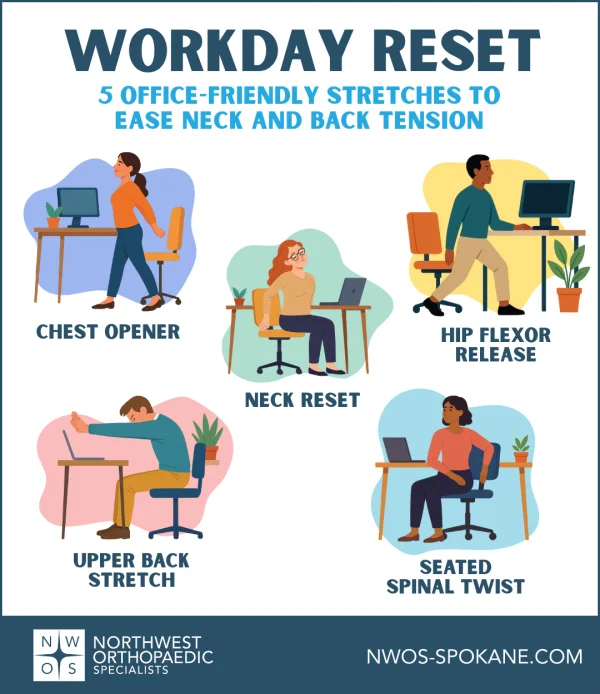
Seated spinal twists are effective for relieving lower back tension. Sit upright and place one hand on the opposite knee, twisting your torso gently to one side. Hold for a few seconds and switch sides. This movement improves spinal mobility without needing to stand up.
Leg Lifts and Knee Extensions
Engage your leg muscles even when seated by performing leg lifts and knee extensions. Extend one leg straight out and hold briefly before lowering it. Then, bend your knee and hold the position. These exercises promote circulation and reduce stiffness in the legs caused by sitting.
Standing Exercises You Can Do Without Leaving Your Desk
Calf Raises and Hamstring Stretches
Standing calf raises are a simple way to activate your lower legs. Rise onto your toes and slowly lower back down, repeating several times. Pair this with gentle hamstring stretches by placing one foot on a low surface and leaning forward slightly to stretch the back of the thigh. Both help alleviate stiffness and boost circulation.
Desk Push-Ups and Wall Sits
Desk push-ups utilize your desk for resistance. Place your hands on the edge and perform push-ups to engage your arms and chest. Wall sits involve leaning against a wall and sliding down into a seated position, holding your body weight with your legs. These exercises build strength and combat muscle stiffness without needing special equipment.
Incorporating Desk Exercises into Your Daily Routine
Setting Reminders and Scheduling Breaks
Consistency is key when it comes to desk exercises. Setting regular reminders or alarms encourages you to take movement breaks throughout the day. Scheduling short exercise sessions every hour prevents stiffness from accumulating and maintains energy levels during work.
Combining Exercises with Mindfulness and Breathing Techniques
Adding mindfulness and controlled breathing to your exercise routine enhances relaxation and focus. Deep breaths help oxygenate muscles and reduce stress. Combining movement with mindful pauses creates a balanced approach to physical and mental well-being at work.
Tools and Accessories to Enhance Your Desk Workout
Resistance Bands and Small Weights
Resistance bands and small hand weights can add variety and intensity to desk exercises. These portable tools allow you to strengthen muscles with minimal effort. Incorporating them into stretches and movements can prevent muscle imbalances and improve endurance.
Ergonomic Chairs and Standing Desks
Investing in ergonomic chairs supports proper posture and reduces strain during prolonged sitting. Standing desks offer the flexibility to alternate between sitting and standing, encouraging more movement throughout the day. Together, these accessories create an environment that promotes regular exercise and reduces stiffness.


